Exploring the Duty of Light Weight Aluminum Spreading in the Development of Industrial Production
Aluminum casting has actually played a pivotal role in forming modern-day commercial production. Its sturdy and light-weight nature has transformed the manufacturing of parts for various fields, consisting of auto and aerospace. With improvements in casting methods, the sector has actually seen renovations in precision and effectiveness. As sustainability ends up being significantly important, the recyclability of aluminum adds another dimension to its significance. What implications does this have for the future of manufacturing techniques?
The Beginnings of Aluminum Spreading
When the convenience of aluminum was initial acknowledged, Light weight aluminum casting has a rich background that dates back to the late 19th century. Originally, this lightweight steel was regarded testing to deal with as a result of its high melting point and susceptibility to oxidation. Cutting-edge minds began to discover its capacity, leading to the growth of different casting methods. The intro of light weight aluminum right into industrial applications marked a significant turning factor in manufacturing, enabling the creation of detailed elements that were previously unattainable with other steels. By the early 20th century, light weight aluminum casting had acquired traction in various sectors, from automobile to aerospace, owing to its toughness and light-weight properties. The establishment of shops and the development of light weight aluminum alloys further moved its appeal, establishing the phase for future developments. The beginnings of aluminum spreading laid the foundation for its essential role in contemporary commercial manufacturing.
Key Innovations in Aluminum Casting Techniques
Current innovations in aluminum casting methods have actually considerably transformed industrial production. Technologies in die spreading procedures have improved precision and performance, while the advancement of sand spreading has boosted flexibility and cost-effectiveness. These advancements are improving the landscape of light weight aluminum production and broadening its applications across different markets.
Die Casting Innovations
As industries endeavor for enhanced efficiency and product quality, die spreading has become a focal point for advancement in aluminum casting strategies. Current innovations have actually concentrated on improving mold layout, temperature level control, and product buildings, considerably minimizing cycle times and raising accuracy. The intro of computer-aided style (CAD) and simulation software has enabled manufacturers to optimize pass away geometries and anticipate prospective defects before manufacturing. Furthermore, the assimilation of automated systems has structured workflows, improving uniformity and decreasing human mistake. Innovations such as vacuum cleaner die casting and semi-solid metal casting have actually better improved the mechanical residential or commercial properties of light weight aluminum elements, resulting in lighter, stronger items. These improvements setting pass away spreading as a vital component in the affordable landscape of modern production.
Sand Spreading Development
Advancements in aluminum casting methods have not been restricted to die casting; sand spreading has additionally undergone considerable development. Commonly reliant on hands-on processes, modern-day sand casting has welcomed automation and digital modern technologies, boosting efficiency and accuracy. Technologies such as computer-aided style (CAD) enable more elaborate mold designs, while 3D printing of sand molds has actually transformed manufacturing times and lowered material waste. In addition, the intro of innovative sand combinations enhances the surface finish and mechanical residential properties of actors components. These advancements not just reduced manufacturing prices however additionally broaden the extent of applications for sand-cast aluminum products. As sectors require higher top quality and faster turnaround, the advancement of sand spreading remains crucial in meeting these modern-day production challenges.
The Effect of Aluminum Casting on the Automotive Market
Aluminum casting has transformed the auto sector by enabling the production of light-weight components that enhance vehicle performance. These developments contribute considerably to enhanced fuel performance, straightening with ecological criteria and customer demands (aluminum casting). Additionally, the convenience of light weight aluminum spreading cultivates design flexibility, enabling for innovative techniques in car production
Lightweight Part Benefits
The automotive industry has actually significantly welcomed lightweight elements to boost fuel performance and efficiency. Aluminum spreading has actually arised as a key innovation in this shift, allowing suppliers to produce components that are not only lighter yet additionally structurally robust. These light-weight components add to improved lorry dynamics, enabling far better handling and acceleration. In addition, light weight aluminum's deterioration resistance lengthens the life-span of automobile components, decreasing maintenance prices gradually. The flexibility of light weight aluminum casting permits complex designs that were formerly unattainable, promoting technology in automobile looks and functionality. As auto producers continue to prioritize sustainability, the use of light-weight aluminum cast elements aligns with initiatives to lower general lorry weight, marking a substantial advancement in automobile design.
Enhanced Gas Efficiency
As the auto sector looks for cutting-edge ways to improve gas performance, light weight aluminum casting has become a pivotal option. The lightweight residential or commercial properties of light weight aluminum substantially reduce car weight, resulting in boosted gas economic situation. By substituting larger products with aluminum cast components, makers can maximize engine effectiveness and lessen power consumption. This shift not just assists in minimizing greenhouse gas discharges however additionally lines up with worldwide sustainability goals. Additionally, aluminum's outstanding thermal conductivity permits much better warm dissipation in engines, additionally boosting performance and effectiveness. Consequently, lorries making use of light weight aluminum cast parts can accomplish higher miles per gallon, appealing to eco-conscious consumers and meeting strict regulatory standards. This development underscores light weight aluminum's crucial function in the future of vehicle production.
Layout Flexibility and Technology
While typical materials frequently impose limitations on layout, aluminum casting offers unparalleled versatility that promotes innovation in the automotive sector. This versatility allows makers to develop intricate geometries and detailed features that were previously unreachable. Lightweight my site aluminum components can be customized to satisfy particular performance demands, enhancing both car performance and appearances. Additionally, the spreading procedure sustains rapid prototyping, making it possible for quicker iterations and lowering time-to-market for new layouts. As automakers significantly focus on sustainability, aluminum's recyclability enhances layout initiatives, promoting green practices. On the whole, light weight aluminum spreading encourages developers and designers to push the boundaries of imagination, leading to the growth of sophisticated cars that meet modern consumer demands for performance, safety, imp source and ecological obligation.
Advancements in Aerospace Via Light Weight Aluminum Casting
Light weight aluminum spreading has transformed the aerospace industry by making it possible for the manufacturing of light-weight yet highly durable components. This advancement enables the development of intricate shapes that traditional production techniques can not attain, bring about improved efficiency and effectiveness in airplane design. Trick applications include engine parts, structural components, and intricate settings up that gain from light weight aluminum's excellent strength-to-weight ratio.
Furthermore, developments in casting techniques, such as high-pressure die casting and financial investment spreading, have actually boosted dimensional accuracy and surface finish, lowering the demand for substantial machining. These advancements enhance production processes, decrease lead times, and reduced manufacturing expenses, making aluminum parts significantly attracting aerospace designers
Furthermore, the ability to integrate numerous features into a solitary cast component lessens setting up time and possible factors of failure. As an outcome, light weight aluminum spreading proceeds to play an important duty ahead of time aerospace modern technology, adding to the development of more secure, much more effective, and ecologically pleasant aircraft.
Sustainability and Ecological Advantages of Light Weight Aluminum Spreading
The aerospace sector's change towards light weight aluminum casting not only improves performance yet also adds positively to sustainability efforts within commercial manufacturing. Aluminum casting offers substantial environmental advantages, mainly due to light weight aluminum's fundamental recyclability. About 75% of aluminum produced is still being used today, showcasing its potential for circular economic situation practices. In addition, the energy needed to reuse light weight aluminum is noticeably lower-- as much as 95% much less-- contrasted find out this here to creating new aluminum from ore.
Furthermore, aluminum spreading procedures commonly create much less waste, as innovative techniques permit the effective use materials. This minimizes the ecological impact associated with production. The light-weight nature of light weight aluminum likewise causes a lot more fuel-efficient aircraft, minimizing greenhouse gas exhausts during operation. Generally, the integration of aluminum casting in commercial production not only supports cutting-edge layout and performance yet also aligns with international sustainability objectives, making it an essential option for ecologically conscious industries.
The Future of Light Weight Aluminum Casting in Manufacturing
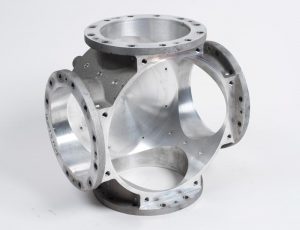
In addition, improvements in alloy development are anticipated to improve the homes of cast aluminum, making it lighter and much more resilient. These enhancements will certainly not only satisfy the growing demands of fields like automobile and aerospace yet likewise add to environmental objectives by reducing power consumption. Inevitably, the future of aluminum casting in production appears positioned for a paradigm change, driven by technology's capability to innovate and enhance producing procedures
Frequently Asked Concerns
Just How Does Aluminum Casting Compare to Other Steel Casting Processes?
Light weight aluminum casting deals advantages such as lower weight, boosted corrosion resistance, and much better thermal conductivity contrasted to various other steel casting processes. Nonetheless, it may be much less ideal for high-temperature applications than materials like steel or iron.
What Are the Key Safety And Security Concerns in Aluminum Casting?
The primary safety and security problems in light weight aluminum spreading include exposure to molten steel, possible burns, breathing of dangerous fumes, and risks connected with equipment operation. Appropriate security procedures and personal protective equipment are vital to minimize these risks.
Can Aluminum Casting Be Utilized for Artistic Purposes?
Light weight aluminum spreading can certainly be used for creative functions. Musicians often appreciate its flexibility, light-weight nature, and capacity to record intricate details, enabling the creation of both decorative and functional pieces that display imagination and workmanship.
What Are the Costs Connected With Aluminum Casting?
Exactly How Has Light Weight Aluminum Spreading Influenced Global Manufacturing Trends?
Aluminum casting has substantially affected global manufacturing trends by offering lightweight, durable components, reducing production prices, and boosting design adaptability. Its fostering throughout different markets has streamlined procedures and promoted innovation, forming modern production methods worldwide.
Aluminum casting has a rich background that dates back to the late 19th century when the versatility of light weight aluminum was very first identified. As industries venture for boosted effectiveness and item high quality, die spreading has actually emerged as a focal factor for technology in aluminum spreading techniques. Developments such as vacuum pass away spreading and semi-solid metal casting have actually additionally enhanced the mechanical buildings of light weight aluminum parts, leading to lighter, stronger products. Innovations in aluminum spreading methods have actually not been restricted to pass away spreading; sand spreading has actually additionally undergone significant advancement. Light weight aluminum casting offers significant ecological benefits, mostly due to light weight aluminum's inherent recyclability.